
ELION · AUTOLOGOUS SKIN MICROGRAFT
AUTOLOGOUS SKIN MICROGRAFT
Autologous micrograft injection,
focused on melanocytes and pigment progenitor cells.
A small sample of your own skin is prepared as an injectable suspension,
then delivered directly into the hypopigmented scar using ELION's own cell injector.
TREATMENT PROCESS
Treatment Process
-
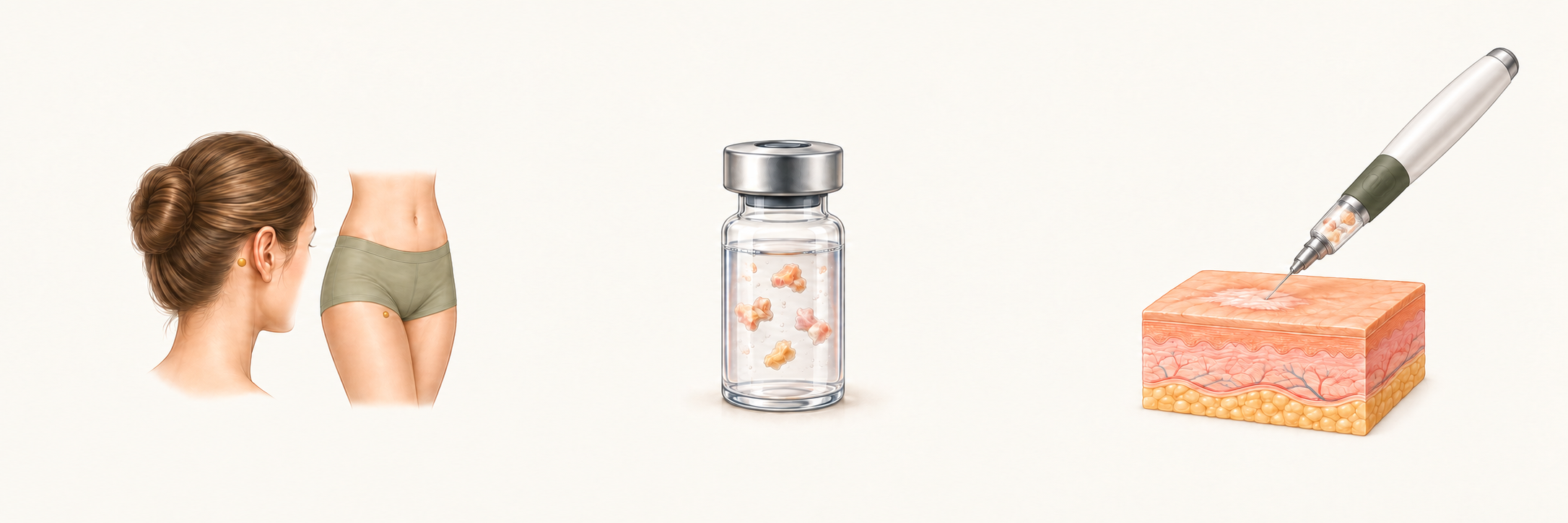
01 · COLLECTION Collect a Small Skin Sample
A donor site, such as the hairline or groin, is selected based on your skin condition. A small amount of tissue is collected as needed.
-
02 · PREPARATION Prepare Micrografts the Same Day
The tissue is divided into tiny micrografts and prepared as a suspension for injections across the scar.
-
03 · APPLICATION Direct Injection of the Micrograft Suspension
The prepared micrograft suspension is injected directly using a cell injector developed by ELION, according to the scar's location and extent.
After treatment, we check healing at the donor and treatment sites and monitor changes in the color difference.
UNDERSTANDING
Scar color matters
in the assessment, too.
A hypopigmented scar looks lighter
or whiter than the surrounding skin.
We assess color differences in scars left by surgery, injury, or burns. The cause of pigment loss, scar thickness, and firmness are considered together when planning treatment.
SKIN & PIGMENT
Melanocytes and
melanocyte progenitor cells
Melanocytes · Melanocyte progenitor cells
Melanocytes produce melanin, which gives skin its colour. Melanocyte progenitor cells can mature into melanocytes.
From a Small Tissue Sample to an Injectable Suspension
Tissue-processing technology covered by a patent registered in Korea divides skin tissue into small micrografts. These are prepared as a micrograft suspension for same-day injection.
Applied with a Cell Injector Developed by ELION
The prepared micrograft suspension is injected across the hypopigmented scar using a cell injector developed by ELION. Application sites are planned according to the scar's location and extent.
BEFORE TREATMENT
What we review
before treatment.
- What caused the scar and when it formed
- The extent of the lighter area and your current skin condition
- Previous treatments and the planned skin donor site
Treatment response and recovery time vary from person to person. Skin tissue collection and injection may cause pain, redness, swelling, infection, pigment changes, or scarring at the donor site. We explain these risks and provide care instructions before treatment.
QUESTIONS
Frequently Asked Questions
What kinds of scars can I ask about?
You can discuss scars from surgery, injury, or burns that look lighter or whiter than the surrounding skin. During your consultation, we assess the cause of pigment loss and your skin condition to determine suitability.
Are tissue collection and application done on the same day?
According to the plan agreed during your consultation, we collect tissue, prepare micrografts that day, and apply them to the scar. A donor site, such as the hairline or groin, is selected based on your skin condition.
How is a small tissue sample prepared and used?
The collected tissue is divided into small micrografts and prepared as an injectable suspension. The suspension is applied across the scar according to its shape and extent.
What care is needed after treatment?
We provide instructions on protecting and cleansing the donor and treatment sites, along with sun protection. Healing and color changes are checked at scheduled follow-up visits.
ELION CLINIC